Showing posts with label NASA. Show all posts

Tuesday, September 13, 2016

OSIRIS-Rex: Dinosaur or science mission?

On September 8th, 2016, NASA used an Atlas V (411) 1 to launch the OSIRIS-REx 2 asteroid sample return mission 3 to asteroid Bennu4.
So let's review what that means:
1) The Atlas V (411) is a two-staged rocket built and operated by United Launch Alliance that has been in service since 2002, primarily used for launching military satellites and often sending robotic probes to far-off solar system destinations. As launchers go the Atlas V has an incredible reliability record with 65 straight successful launches. There have been a few minor in-flight issues here and there but the "Mighty Atlas" (as ULA's CEO is fond of calling it) always gets the job done. As successful a rocket as it may be, it's not been without controversy. In fact, in the wake of Russia's incursion into Crimea the US government temporarily banned the import of Atlas V's first stage engine because it is built in Russia.
     Atlas V comes in several variants, which is the reason for the "411" code in this instance. That means that it has:
  • A 4-meter diameter (13.1 ft) payload fairing that protects the payload during flight through the atmosphere. A 5-meter (16.4 ft) fairing is also available for larger satellites.
  • 1 side-mounted Solid Rocket Booster, built by Aerojet Rocketdyne, to provide additional thrust early in the flight. Atlas V can use up to five SRBs.
  • 1 Centaur upper-stage engine to take the payload from the upper atmosphere to its final orbit. This upper-stage can have one or two engines.
 Below you can watch the launch of an Atlas V 551, one of the most powerful variants.
For more information, check out ULA's website.

2) OSIRIS-REx is unfortunately NOT a dinosaur but a NASA mission with perhaps the most cumbersome acronym of all time. Its full name is the Origins Spectral Interpretation Resource Identification Security - Regolith Explorer. The mission is designed to visit an asteroid (Bennu) that occasionally passes close to the Earth, to study and characterize it. OSIRIS-REx will
  • Measure how sunlight absorbed then re-radiated by the asteroid's surface causes it to rotate and change its orbit around the sun over time--called the Yarkovsky Effect. This could affect how close Bennu comes to Earth--possibly close enough to impact our planet in the future.
  • Map the distribution and chemistry of Bennu's surface.
  • Return a sample of the asteroids loose rocky, dusty surface material called "regolith." More about this in the section below.
 

3) Asteroid sample return is OSIRIS-REx's primary mission. After orbiting Bennu for an extended time to understand its gravity and rotation, an arm will extend to the surface and release a burst of gas to push surface material into a surrounding screen where 2 to 70 ounces (60 to 2000g) of the material will be captured. That capture device (called TAGSAM) will then be encased in a heat shield and make a fiery return to Earth's surface. This will allow the samples to be handled and analyzed by scientists with a wider range of observational and testing equipment than if mission planners sent a select few instruments into space. It will also allow scientists to save samples for future generations to study with currently-unknown testing processes that may be developed in the decades to come.

4) Asteroid Bennu is a 1,600 ft (500m) wide asteroid and, like all asteroids, is a remnant of the formation of our early solar system. After gravity had gathered most of the material into planets and moons what was left over became the asteroid belt. Radar and visual observations lead scientists to believe that Bennu is extremely high in carbon which also gives it a remarkably low level of reflectivity. This has made observations difficult but OSIRIS-REx's visit will provide first-ever close up imagery and radar data on this asteroid. That data will be compared with Earth-based observation that may reveal better observation methods for the future that could come in handy nearing the years 2175 to 2196 when Bennu stands a 1-in-2700 chance of impacting the Earth. Looks like humans of the future could either use good luck OR good science.


Have you somehow reached the end of this and have a desire to read MORE detailed information about the OSIRIS-REx mission? Well you can click this link for the official mission factsheet.


Tuesday, August 23, 2016

Sounding Rockets

On August 17th, 2016, NASA's Wallops Flight Facility launched a suborbital sounding rocket for the RockSat-X mission. Now...what the heck did all of that mean?

Let's break it down.

NASA's Wallops Flight Facility is an airfield and launch complex at Wallops Island, on the eastern shore of Virginia. For over 70 years this facility has conducted orbital and suborbital (see next paragraph) rocket launches for research purposes, has managed scientific balloon projects, conducted flights to the arctic to measure sea ice change, and launched drones to fly through and measure hurricanes. Most recently this facility has gained attention for being the launch site of Orbital ATK's Antares rocket which resupplies the International Space Station.


A suborbital rocket is one that launches into space but no part of that rocket stays there. Everything that goes up comes back down. Orbital rockets fly a path mostly parallel to the Earth's surface, which is how they end up in a circular orbit around the planet but suborbital rockets often fly very steep vertical trajectories. They fly as low as about 30 miles and as high as 900 miles above the Earth's surface then descend back to the surface. The upper sections of the rocket that carry the science payloads are returned to Earth under parachutes where they splash down in the ocean and are recovered by boat crews. Flights often last as little as 15 minutes.

Sounding rockets get their title from maritime tradition. In the old world of sailing ships, to "take a sounding," meant to drop a weight and length of rope into the water to measure the depth beneath your ship. So "sounding" became a synonym for "measurement." Thus, sounding rockets are simply measurement rockets. They carry a wide variety of science experiments into the upper atmosphere and the reaches of space several hundred miles above our heads for the purpose of measuring natural phenomena that only take place there, to make brief observations of astronomical targets, or sometimes to run brief experiments in microgravity while the rocket is in free-fall back to Earth. The variety of subjects to measure and ideas to test is so extensive that NASA's Wallops Flight Facility has conducted over 16,000 sounding rocket flights.

RockSat-X is a cooperative program where several universities conduct their experiments on the same rocket flight--in this case it was a rocket called a Terrier-Improved Malemute. No, this is not a new dog breed mix, it's a combination of a Terrier booster rocket and a Malemute upper stage. (No, I don't know how they got those names) This particular flight included experiments that observed crystal growth in microgravity, observed how a molten blob of metal cools and reshapes in microgravity, tested the strength and effectiveness of 3D printed airfoil shapes, detected and collected micrometeroids, and a set of HD cameras to watch the deployment of all of these experiments and more. RockSat-X reached 95 miles in altitude and many of the experiments returned their data via radio but unfortunately the upper stage with the experiment hardware was not able to be recovered which means that some of the physical experiments could not be examined in person. For more detailed info on this mission just click here.


If you have any questions about what you just read or would like to read more info on anything mentioned here, please leave a comment or contact me!

Wednesday, March 19, 2014

My Journey to NASA Wallops - Part 1: Excitement and Frustration

On December 4th of 2013, I received the most exciting e-mail that has yet to grace my inbox. It was from NASA Social, a small crew that coordinates the social media efforts of NASA as a whole and organizes special events. The e-mail was to inform me that my application had been accepted for media credentials to attend their next event: the launch of the Orbital Sciences Antares rocket with Cygnus resupply ship, departing from Wallops Flight Facility in Virginia, destined for the International Space Station. After a lifetime of obsession with spaceflight I was finally going to see a full-scale launch in person! As a bonus, it turned out that the launch date was December 17th, exactly 110 years to the day that the Wright Brothers first flew.

I confirmed my intention to attend, I booked a hotel room, I took off from work. All that was left was the awful wait. Knowing that I was attending made the next few days crawl like molasses and the two weeks until launch say seemed a torturous wait.

December 9th - I got an e-mail stating that the launch had slipped back a day, to the 18th. Not a big deal. It's spaceflight and these things happen. The hotel happily changed my reservation and my work was kind enough to change my days off. The schedule of events arrived not long after and this particular rocket nerd was overjoyed seeing the specifics of what was in store for me.

I was so glad we got that delay out of the way early. The Antares is a reasonably simple rocket and they'd reported that they were working no issues and there was a 95% chance of favorable weather. "Let's do this!" I thought.

December 11th - The International Space Station experienced a major malfunction of the ammonia Cooling Loop A, causing heating issues onboard. The crew was fine but a number of systems aboard ISS had been shut down to preserve power for sensitive experiments. If the issue wasn't resolved soon it would have an impact on launch date because there is an added level of risk anytime two spacecraft dock together but to do so with one spacecraft (the station) in a deficient state would be unnecessarily dangerous.

December 14th - Planners/controllers at NASA decided to delay the launch until December 19th while the ISS ground controllers attempted to regulate the temperature control system through a software modification. So far the software changes had limited success and they were attempting to find a "sweet spot" that would allow the Antares to fly up and dock with the ISS on time, then astronauts could conduct spacewalks to replace the malfunctioning flow valve. NASA was going ahead and loading time-sensitive cargo into Cygnus in case it all worked out. I called the hotel to push my reservation back another day. The woman on the phone asks why I needed to change and when I tell her about the launch delay she say, "Oh, we're going to get a LOT of that today!"

December 17th - With no word advising otherwise, I began to pack a bag to depart the next morning for my two days down in Virginia. While checking to see what my fellow Social attendees were saying via Facebook and Twitter I stumbled across the NASA announcement that they would indeed be delaying the Antares launch until some time in January. My mind has a tendency, which I sometimes like and sometimes dislike, to easily notice connections between events, such as the fact that this flight was delayed until "some time" on the day that I originally thought I would see that rocket climb to space while hearing and feeling the roar of those AJ-26 rocket engines... Stupid brain. Why would you go and point out something like that when you know I'm already annoyed?

December 20th - It was announced that the launch had been reschedule for NET (No Earlier Than) January 7th, 2014. Again, the requisite plans were assembled. Took a couple more days off from work and booked a hotel room again. One cool aspect of all this was that the woman at the hotel gave me the room for the same rate that I had in December "because you're with the NASA group." It is pretty awesome to have somebody say you got something because you're "with" NASA!

In the coming days we learned that the software patch for the ISS ammonia flow control valve wasn't working and after a series of very successful spacewalks the malfunctioning components were swapped out for functional ones. With this, the problem was resolved and the station was once again ready to receive a visitor, in the form of a Cygnus resupply spacecraft.

And then we all got to learn an evil new phrase:  

"Polar Vortex"

I don't know the technical details behind it (I'm more interested in things that fly through the atmosphere than the actual atmosphere itself) but I've come to believe that it's when that guy Snow Miser from "The Year Without A Santa" beats his brother Heat Miser in a boxing match and everywhere gets to measure local temperature with single digits. Both Fahrenheit and Celsius.

On January 3rd, the launch was delayed another day, until January 8th, because the air temperature dropped below the operating temperature of some of Antares' components.

What did I do to deserve such torment from the universe?!

Thankfully, no further delays occurred and in the early hours of January 7th I left home on an exciting journey to see things in person that I had heretofore only seen in pictures or read about.

To be continued in My Journey to Wallops - Part 2: My Dream Day

Wednesday, January 1, 2014

The Second Space Age: An Overview

Whether the general public knows it or not, we're in the middle of something amazing. We're living through a "Second Space Age." These past couple years, new rockets and new spacecraft have been coming online and entering service as spaceflight in the United States shifts from government-based to commercially-operated. During the Space Shuttle era, NASA owned and operated their fleet of vehicles and over the shuttle's 30-year history that ownership and operation proved to be more costly than anticipated. While it allowed us to build the International Space Station, the next necessary step to permanent human habitation off this planet, the complex and maintenance-heavy shuttle fleet also drained funding away from new vehicle development. So many people were screaming out to the whole of the internet when the shuttle fleet was retired, fearing that NASA was closing up shop, giving up on sending people into space...but the reality is the exact opposite. NASA had cleared up an immense portion of their ever-declining budget to move on to the next target: exploration beyond Earth orbit.

NASA's new capsule, the Orion, has been making steady progress towards providing us with a vehicle that can take us to asteroids, the moon, and beyond. Most people seem to think it's still just an idea, a concept on a drawing board, but in September of this year the Orion is scheduled to make its first unmanned trip into space. Several years from now it will ride skyward with a crew atop one of the newest and largest rockets in the world: the Space Launch System (SLS).
This rocket makes use of flight-proven hardware such as solid rocket boosters and Space Shuttle main engines (which were so reliable that they were reusable) while also adding in 21st century technology such as composite structure fuel tanks that will be lighter and stronger than the old aluminum alloy tanks. Less weight there means more weight that can go into space. More bang for the buck, figuratively and literally.

But what about the Station? It's still there and still needs to be resupplied and crews exchanged every few months, right? Of course, and this is where the Second Space Age really comes into being. In the short term we've been able to ride with our partners from Russia, who took up the task of manned flight with their Soyuz spacecraft, a vehicle with an impressive safety record over its nearly 50 years of operation. (Don't worry, it's had many upgrades and modifications since the old days!) That's the beauty of an International Space Station, you can work with others to assure continued service.

A lot of people in this country, however, disapprove of sending astronauts (and dollars) to another country to get to space. The long-term side of the plan has been for NASA to work with private corporations to develop several different spacecraft and rockets that will be able to deliver crew and cargo to the ISS, in a way handing over the "routine" aspect of space to private companies that can compete to do it efficiently and at competitive costs. NASA has shared its vast technical knowledge with US-based aerospace corporations and some of those companies are already providing results. 
SpaceX's Dragon and Orbital Sciences' Cygnus have already made trips to the ISS under cargo resupply contracts and may just be a few years until we see private companies operating crewed spacecraft. And the day that a commercially operated, manned vehicle makes it to space will be a VERY big day.

So to summarize the future: private companies operate the rockets that put people into earth orbit and send cargo to the ISS, leaving NASA a bigger chunk of budget to do the bolder, more ambitious projects that take us away from Earth.


There's an impressive collection of companies and individual that are doing amazing things now and in the near-future. Through this "Second Space Age" series you'll be introduced to the new rockets, the new spacecraft, the companies that are building/operating them, and the amazing way it all fits together to expand humanity's ability to understand and navigate through our universe.

Any questions or feedback will be much appreciated. I want to write what you want to read about so let your opinions be known!

Friday, November 15, 2013

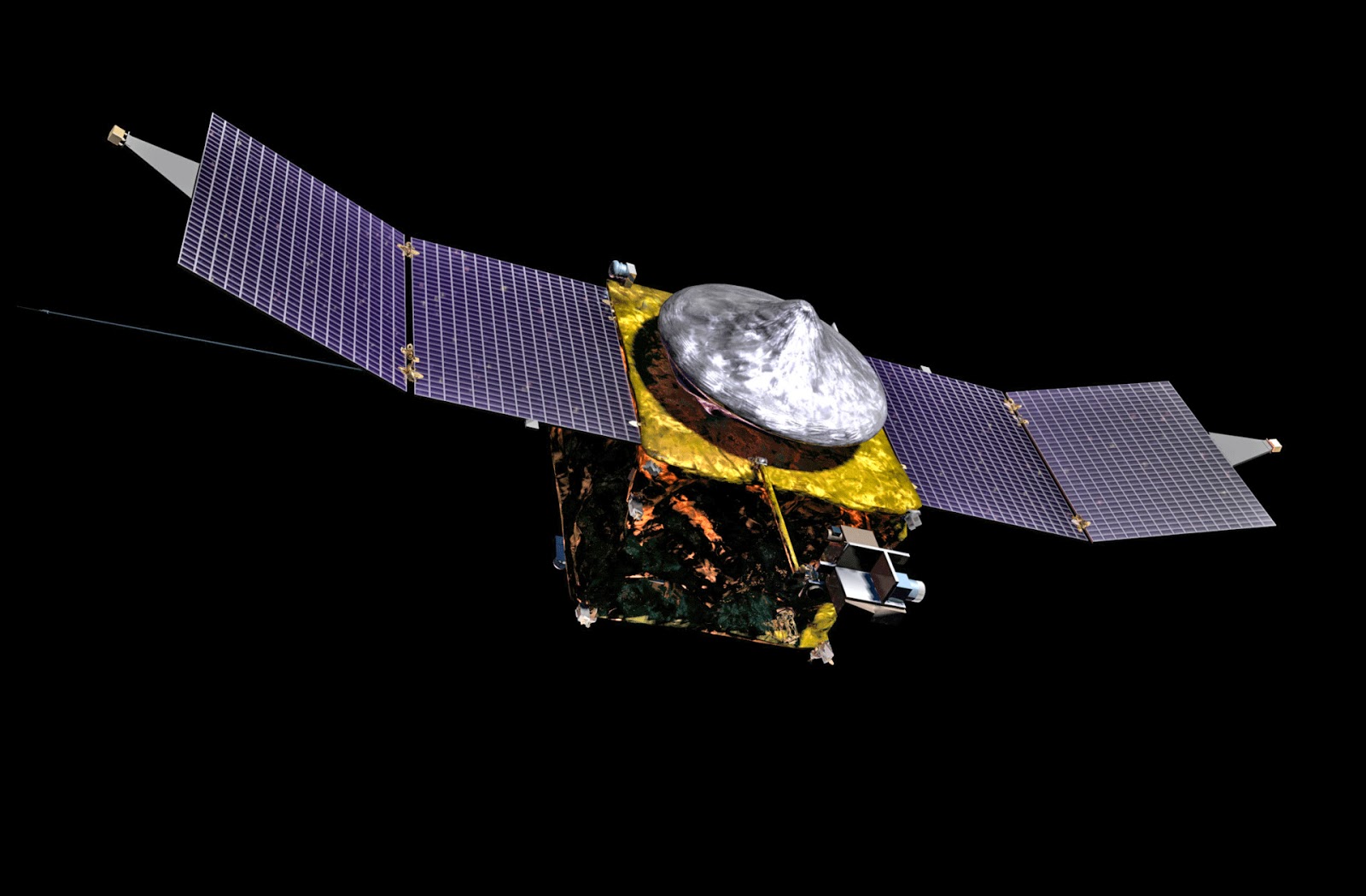
The Basics of MAVEN

The United States' next mission to Mars will be departing Earth this upcoming Monday, November 18th from Cape Canaveral Air Force Station in Florida. MAVEN, the Mars Atmosphere and Volatile EvolutioN mission, will take 10 months to reach Mars then enter orbit. Once there, it will spend one Earth year (0.53 Martian years) passing repeatedly through the red planet's atmosphere where it will use its scientific payload to analyze the composition and physics of the thin atmosphere. To give a general comparison, Mars' atmosphere has only about 1/1000 the mass of our own.

Ground-based rover and lander missions have studied geological records of the planet's past and through that data it's become apparent that long ago Mars had a far more robust and complex atmosphere, possibly one like the Earth currently enjoys. The prevailing theory is that solar wind and radiation has had an eroding effect and scientists want to measure the rate of gaseous loss and ultimately understand if this is something that may someday cause changes to our own world. The other major benefit of MAVEN's research will be an understanding of what kind of atmosphere we would encounter on the first manned mission, allowing for more effective design and construction that will increase the chances of a successful landing on the red planet.

For more detailed information about this mission, check out the official Fact Sheet.

Thursday, November 14, 2013

A Return to American Independence

We have reached the end a two-year gap in America's ability to resupply the International Space Station (ISS) from our own soil. With the retirement of the Space Shuttle fleet in 2011 we lost our ability to regularly loft supplies and new experiments to the space station, leaving us no options but to pay out hundreds of millions of dollars to companies and agencies across the planet to do our work for us. But that is now a thing of the past.

Yesterday NASA held a press conference to officially and successfully conclude the Commercial Orbital Transportation Services (COTS) program that created a partnership between NASA and private aerospace corporations to develop rockets and spacecraft that would meet NASA's technical, performance, and safety standards. NASA set the guidelines and the private companies entered into competition to build what they thought would be the best vehicle at the best price.


Several companies made efforts to enter this new space race and in the end Space Exploration Technologies (SpaceX) and Orbital Sciences Corporation were selected to fly demonstration flights. The selection of multiple companies will ensure that the market for NASA resupply missions will remain competitive, controlling costs and incentivizing increased performance. Both companies have had great successes with their rockets, the SpaceX Falcon 9 and the Orbital Sciences Antares and both vehicles, the SpaceX Dragon (above) and the Orbital Sciences Cygnus (right) have now successfully hauled cargo safely and efficiently to the ISS and Dragon is even able to bring cargo back for further scientific investigation after time in orbit.
 
The successful conclusion of this project is exciting, in part, because it certainly bodes well for NASA's other major vehicle initiative,  the Commercial Crew Program (CCP). A parallel to COTS, CCP is an effort to develop, with industry cooperation, safe and reliable manned spaceflight vehicles to transport crews routinely to and from the ISS. Initial test flights for some of those commercial systems are scheduled for 2017 and upon their successful completion NASA would no longer have to sink a major portion of its budget into low-Earth orbit flights and can focus its time, efforts, and funding on sending manned missions to the moon, asteroids, and beyond.


Monday, September 2, 2013

LADEE: A Flight of Firsts (Part 3) Mid-Atlantic Regional Spaceport


The first lunar flight from NASA Wallops/MARS
The Minotaur V rocket that will be carrying the LADEE spacecraft will be launching from a complex on the eastern shore of Virginia that is no stranger to rocketry activity. The Mid Atlantic Regional Spaceport is located adjacent to, and operated in conjunction with, NASA’s Wallops Flight Facility at Wallops Island, VA, a complex that has been launching rockets for aeronautical research since 1945 when it was established by the National Advisory Committee for Aeronautics, the predecessor to NASA. Some sources estimate that this facility has conducted over 16,000 launches since its opening almost 70 years ago, but this will be the first with a lunar target.

Many flights have left Wallops/MARS aiming to place payloads into Earth orbit, and in a few weeks a resupply mission to the International Space Station (ISS) will be attempted there, but NASA Wallops specializes in sub-orbital science missions that never reach Earth orbit. Those rockets are called "sounding rockets." The flights carry scientific instruments up to 350 miles above the Earth, outside the atmosphere where they can measure things like solar radiation, the Earth’s magnetic fields, astronomy observations, and a whole host of other research topics. The missions are very short duration and the instruments reenter the atmosphere to sometimes burn up and sometimes to be recovered by parachute, but the short duration is offset by the relatively low cost.

The MARS complex has been slowly building up their capabilities over the years from suborbital, to Earth orbit, and soon lunar orbit. While it’s unlikely that they will ever conduct the large launches that we see out of Kennedy Space Center and Vandenberg AFB, Wallops and MARS are setting themselves up as the ideal launch site for lightweight orbital payload shots to the ISS and for corporations looking to put satellites into orbit. Given the trend in the miniaturization of electronics it looks like the Mid Atlantic Regional Spaceport is due to become a key player in the commercial launch world.

Tomorrow's Topic:  LADEE's Launch Profile and "Yo-yo de-spin"
Later this week: Where and When YOU might see LADEE launch!

Saturday, August 31, 2013

LADEE: A Flight of Firsts (Part 1)

In the world of spaceflight, manned and unmanned alike, "firsts" are avoided whenever possible. "Firsts" are typically expensive, technically challenging, and inherently high-risk. NASA's upcoming LADEE (Lunar Atmosphere Dust Environment Explorer) mission will take part in several significant "firsts", which I'll be explaining over the next few days. We'll begin with the spacecraft itself.


The first flight of the Modular Common Spacecraft Bus
Every planetary science spacecraft before LADEE was a custom construction. Planners started with mission objectives and a budget, determined the scientific instruments needed to accomplish their objectives, and then designed the best structure within their budget that could accommodate those instruments. The Modular Common Spacecraft Bus is what it says it is. The MCSB is a system of component segments that can be mass produced to reduce cost and complexity. The spacecraft designers select the necessary modules for their specific mission and the spacecraft is then assembled in less time and with less cost than a uniquely engineered spacecraft. At least that's the concept. LADEE will be the first to put the concept into action.
   Personally, I think it's a brilliant plan because an outstanding amount of a mission's funding goes into the hardware that will take the instruments to their destination(s). If the MCSB lives up to its full potential, planetary science missions have a chance of being flown more frequently and with a greater scientific return per dollar. I'm not usually one to focus on the funding of missions but the general public hasn't typically seen planetary science as being as exciting as manned spaceflight and there tends to be less funding sent in that direction. Thankfully, in the past year the Curiosity rover has brought more focus on science and MCSB might be the key to getting the costs low enough to maintain that focus and support.


Tomorrow's Topic: The first launch of Orbital Sciences' Minotaur V rocket

Friday, August 30, 2013

BANG! ZOOM! Back to the Moon!


         On September 6th, NASA will be launching a new scientific probe to the moon. It’s called LADEE, the Lunar Atmosphere and Dust Environment Explorer. The mission’s scientific aim is to explore the moon’s atmosphere, more accurately called an exosphere. An exosphere is a collection of gasses bound to an object by its gravitational field but those gasses are so thinly distributed that the atoms and molecules don’t even interact with each other. Because of this, we’ve all been taught that the moon has no atmosphere.

            LADEE, a car-sized robotic vehicle, will enter an orbit around the moon at only 20-60 km (12-37mi) in order to pass through the thin lunar exosphere that’s so close to the surface. For 100 days it will use its onboard instrumentation to analyze which gasses are bound to the moon and in what proportion they exist. The other phenomenon that will be investigated is the presence of lunar dust in the exosphere. One lander, sent before our astronauts arrived, Surveyor 7 (1968), photographed strange glowing on the horizon as the sun began to rise and when they arrived our Apollo astronauts also witnessed the glow during their stays on the moon (1969-1972). The prevailing theory is that this is the result of significant amounts of lunar dust above the surface. LADEE will determine if there is indeed any dust present. The interesting part about that experiment is that either way we’ll still have a mystery. If yes, how did it get up there? If no, what caused the glow?

Thanks for reading and stay tuned for more on LADEE and everything else spaceflight related!